
 topgamerzone38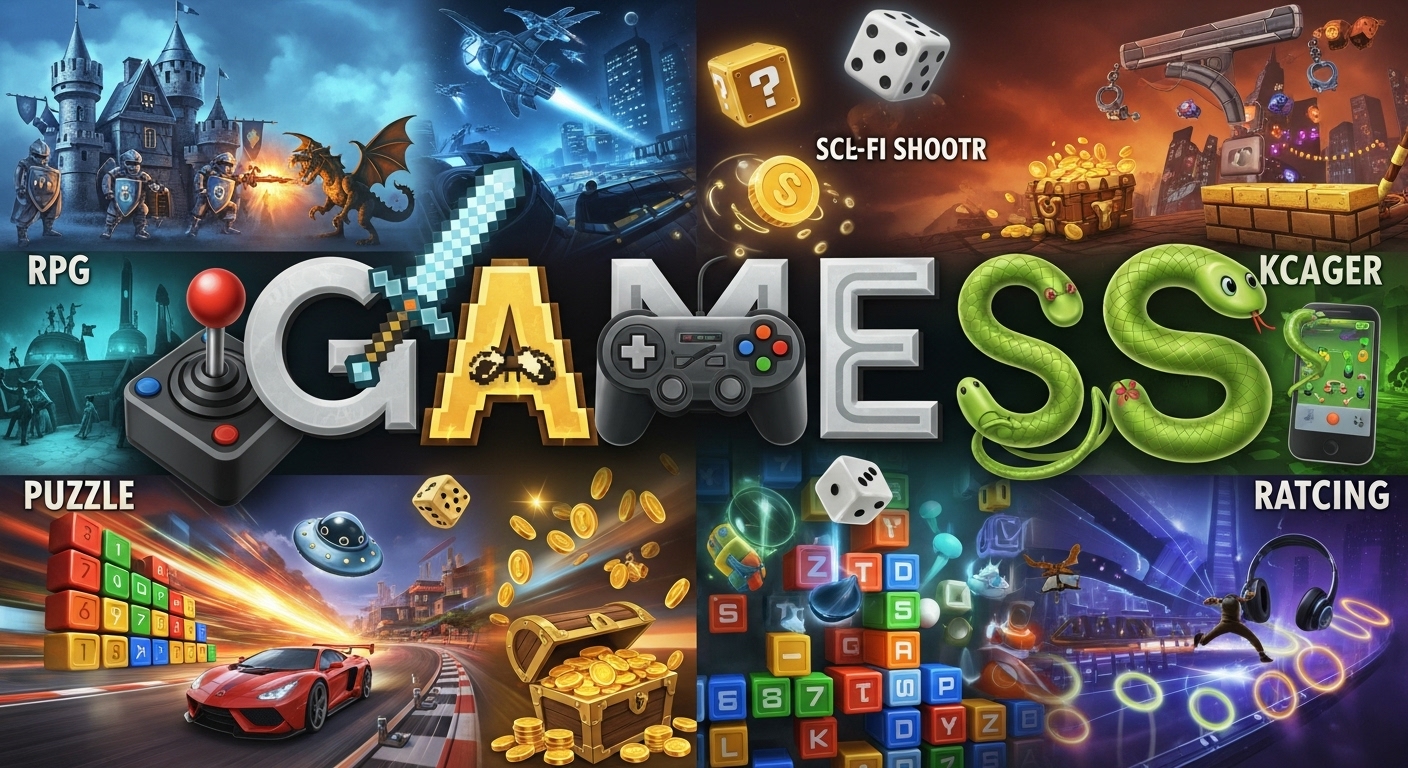
Introduction: The Allure of Games
Games have always been a fundamental part of human culture. From the early days of human civilization, games have provided more than just entertainment; they offer a means of social interaction, intellectual challenge, and a reflection of the values of the time. Today, games have evolved into a global industry that shapes cultures, drives technological advancements, and offers endless entertainment to people from all walks of life.
This blog delves into the fascinating world of games, exploring their origins, evolution, and profound impact on entertainment, education, social life, and even professional development. Whether it’s video games, mobile apps, or traditional board games, games continue to be a key aspect of modern life.
The Origins of Games: A Historical Perspective
Games are as old as human civilization. Evidence of early games can be traced back thousands of years, to ancient Mesopotamia, Egypt, and China. The oldest known board game, Senet, dates back to around 3100 BCE in ancient Egypt. Other iconic ancient games like Go, originating in China around 2500 BCE, and chess, which emerged in India around the 6th century, have endured for centuries, evolving into the games we know today.
These early games were not merely forms of entertainment—they were used to teach strategy, social skills, and sometimes even religious or philosophical lessons. They were an integral part of cultural rituals and intellectual pursuits, with players competing to prove their prowess in front of others. Many of the strategic elements and problem-solving techniques from these ancient games are still prevalent in modern game design.
The Rise of Video Games: The Digital Revolution
The digital revolution of the 20th century brought about the creation of video games, which would redefine the landscape of gaming forever. The invention of early arcade machines like Pong and Space Invaders in the 1970s set the stage for a new era of entertainment. These games were simple, yet captivating, drawing people into the world of interactive entertainment in a way that had never been seen before.
As technology improved, so did the complexity and depth of games. By the 1980s, the home console revolution brought video games into people’s living rooms, with systems like the Atari 2600, Nintendo Entertainment System (NES), and Sega Genesis. These platforms introduced iconic titles like Super Mario Bros., The Legend of Zelda, and Street Fighter, which would go on to become household names and solidify video games as a dominant form of entertainment.
The 1990s and 2000s saw the rise of 3D graphics and the introduction of online multiplayer gaming, which allowed players to connect globally. This era brought landmark titles like Half-Life, The Elder Scrolls, Final Fantasy VII, and GoldenEye 007, which pushed the boundaries of storytelling, graphics, and interactive design.
The Emergence of Mobile Gaming
With the advent of smartphones, mobile gaming became the next frontier for the gaming industry. The launch of the iPhone in 2007 marked a paradigm shift in how games were played, moving them from traditional consoles to handheld devices. Mobile games are now accessible to billions of people, with titles like Candy Crush, Clash of Clans, and Pokémon Go reaching an unprecedented level of popularity.
The appeal of mobile gaming lies in its accessibility and convenience. People can play anywhere, whether they’re on the bus, waiting in line, or relaxing at home. Mobile games range from simple puzzle games to more complex strategy games, attracting both casual players and hardcore gamers alike. This shift in platform has made gaming even more mainstream, and the barriers to entry are lower than ever before.
The Social Aspect of Gaming: Building Communities
One of the most significant changes in the gaming world over the past few decades is the growing emphasis on social interaction within games. The advent of online multiplayer games has allowed people to connect with others around the world. Whether it’s playing with friends or joining online communities, games have become a social experience.
Games like World of Warcraft, Fortnite, and League of Legends feature massive online multiplayer modes that bring people together in virtual spaces to compete, collaborate, and explore. For many players, these virtual worlds are more than just entertainment—they are communities where lasting friendships are formed, identities are shaped, and real-world connections are made.
The social aspect of gaming has also expanded beyond the games themselves. Platforms like Twitch and YouTube allow players to stream their gameplay and build audiences, creating a new form of entertainment for viewers. Esports, in which professional players compete in organized tournaments, has become a major global industry, attracting millions of viewers worldwide.
Competitive Gaming: The Rise of Esports
Competitive gaming, or esports, has grown into a massive industry over the past two decades. What was once a niche activity has now become a global phenomenon, with professional gamers competing for large prize pools, sponsorships, and fame. Esports tournaments for games like League of Legends, Dota 2, and Counter-Strike: Global Offensive now draw millions of viewers both online and in-person.
The rise of esports has legitimized gaming as a professional pursuit, and the industry has attracted major investments, both from traditional sports organizations and tech companies. Esports athletes now train rigorously and participate in boot camps similar to traditional sports, honing their skills to compete at the highest levels. The global reach of esports continues to grow, with major tournaments being broadcast in multiple languages and watched by audiences around the world.
Gaming as a Career Path: Professional Development and Opportunities
The rise of esports and game streaming has also opened up new career paths within the gaming industry. Beyond the players themselves, there are many other professions that support the gaming ecosystem, including game developers, designers, streamers, commentators, and analysts.
For many, gaming is no longer just a hobby—it’s a full-fledged career. Game developers work on creating new experiences and pushing the boundaries of interactive media. Professional streamers and content creators build audiences and turn their love of gaming into lucrative businesses. Game commentators and analysts provide insightful commentary during live tournaments, while esports coaches help players refine their strategies.
The gaming industry is one of the fastest-growing sectors in entertainment, and as technology advances, new career opportunities will continue to emerge, offering diverse paths for those passionate about gaming.
The Impact of Games on Culture and Society
Games have had a profound impact on modern culture. From the language used by gamers to the widespread adoption of gaming references in movies, television, and music, games have become ingrained in the cultural fabric of society. Iconic characters like Mario, Link, and Master Chief have become pop culture icons, appearing in everything from merchandise to commercials.
Games also serve as a platform for storytelling. Titles like The Last of Us, Red Dead Redemption 2, and Mass Effect have brought cinematic storytelling to the gaming medium, delivering emotionally complex narratives that rival those of movies and television. Through these stories, games tackle important themes such as identity, morality, and the human condition, pushing the boundaries of what interactive media can achieve.
Furthermore, games have become a tool for social change. Many game developers are using their platforms to address important societal issues, from environmental sustainability to mental health awareness. Games like Celeste, which tackles themes of mental illness, and Papers, Please, which explores the ethics of immigration and authoritarianism, show how games can be used as a vehicle for reflection and social commentary.
The Future of Gaming: What Lies Ahead?
As technology continues to evolve, so too does the world of gaming. The future of gaming promises even more immersive and interactive experiences. Virtual reality (VR) and augmented reality (AR) are becoming more mainstream, offering new ways for players to interact with games. The development of cloud gaming allows players to stream games without needing powerful hardware, making high-quality gaming more accessible to a broader audience.
The rise of artificial intelligence (AI) will also play a major role in the future of gaming. AI will allow for more dynamic, responsive game worlds and smarter in-game characters. The integration of machine learning will help create adaptive difficulty levels, personalized gameplay experiences, and richer, more immersive narratives.
Finally, gaming’s role in education is likely to grow. Educational games that teach everything from basic math to advanced engineering are already being used in classrooms, and as the technology improves, so will their effectiveness. The potential for gaming to enhance learning, promote creativity, and improve problem-solving skills is vast, and the future of games in education looks bright.
Conclusion: More Than Just a Game
Games are no longer just a pastime—they are a form of art, a method of socialization, and a powerful tool for learning and professional growth. From their humble beginnings as simple board games and arcades to their status as a multi-billion-dollar global industry, games have evolved into a cultural force that transcends generations and borders.
As the gaming world continues to evolve, we can only imagine the new possibilities that will emerge. But one thing is clear: games are here to stay, and their impact on society will continue to grow, offering endless opportunities for entertainment, creativity, and connection.


